Whether you are planning consumer, corporate, or B2B events, this article provides clear steps on how to organize an event from start to finish.
An event management plan is crucial as it organizes key information, serves as a guide for all event components, and should be aligned with specific, measurable, achievable, relevant, and time-bound goals and objectives.
It helps you create memorable experiences for attendees and shows how to maximize the return on investment from your events.
In addition to this article, you may want to download the ultimate event planning checklist for in-person events for free. This checklist will help you avoid overlooking details, missing deadlines, encountering coordination issues, or exceeding your budget.
Lastly, this guide connects you with the best event management platforms in 2025 to compare features and pricing tailored to your company’s needs.
What is a Successful Event
A successful event achieves its main goals and leaves a positive impact on attendees and organizers.
Key signs of success include the following:
- Goal achievement: The event fulfills its purpose, whether it’s to raise awareness, promote a product, celebrate, or educate.
- Satisfaction: Attendees leave satisfied with their experience, enjoying engaging content, networking opportunities, and overall organization.
- Feedback: Positive responses from attendees, sponsors, and stakeholders show that expectations were met or exceeded.
- Organization: The event is well-planned, runs smoothly, and sticks to its schedule and budget.
- Results: Tangible outcomes like increased sales, greater visibility, new partnerships, or community engagement demonstrate success.
- ROI: For business events, achieving a positive return on investment is crucial.
- Impact: The event leaves a lasting impression and enhances the organization’s reputation and goals.
In essence, successful events not only execute flawlessly but also achieve their objectives and create a meaningful experience for everyone involved.
Tip: Using the right event management platform makes event management more efficient and successful while reducing stress.
How to Organize an Event Step by Step
Knowing how to run successful events means organizing everything into one plan—an event plan.
Event planners play a crucial role in designing and executing the event by creating a compelling and interactive event agenda, incorporating engaging activities, and utilizing cutting-edge event technology to enhance the attendee experience.
Working backwards from the event date to establish a timeline for planning and organization is crucial.
With a clear example, you just need to fill in the details.
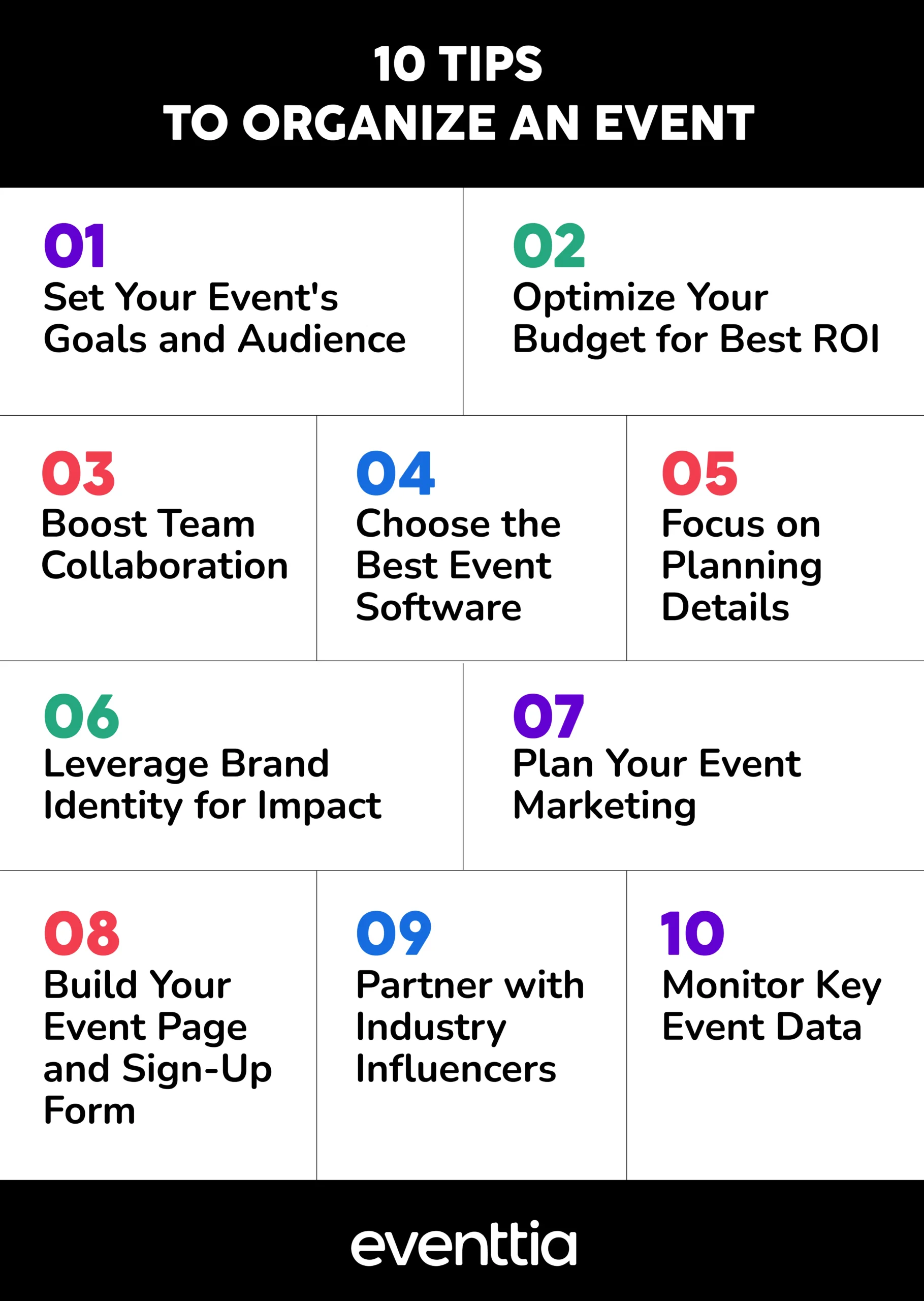
Your event plan should cover:
- Goals and objectives
- Team roles and responsibilities
- Budget
- Event master plan
- Venue and vendors
- Event management software
- Branding
- Speakers and special guests
- Partnerships and sponsorship
- Promotion and marketing
- Event data & analytics
Let’s break down the main steps to help you start smoothly.
1. Define Your Event’s Purpose, Target Audience, Goals and KPIs
The sooner you start planning your event, the more choices and flexibility you’ll have. Early planning not only reduces stress but also enhances opportunities for innovation, partnerships, and promotions.
It allows brands to anticipate challenges, adjust strategies, and refine details, ensuring the event stands out in a competitive business environment.
The key to any successful event lies in understanding your audience. Knowing their demographics, interests, and behaviors allows you to create an event that is not just enjoyable but also unforgettable.
In a competitive environment, delving deep into attendee insights can make the difference between an average event and one that becomes the talk of the town.
The first step in planning an event is to define your goals. This means figuring out the event’s purpose and what you want to achieve.
For example, the event could be a fundraiser, a product launch, or a way to increase brand awareness. The goals usually relate to how attendees will react and participate.
Questions to consider:
- Who/What/Why is this event for?
- What insights or data from past events can we use to better understand our audience? Reviewing previous events helps ensure no details are overlooked and identifies potential cost-saving opportunities.
- How will this event reinforce our brand’s message or values?
- What specific outcomes or impacts do we expect from this event?
- Are there specific metrics (such as attendance rate, brand engagement, lead generation, revenue, session attendance, cost per attendee, etc.) we aim to achieve?
When Gucci launched its “Gucci Garden” in Florence, it wasn’t just another store opening. It blended a museum, shop, and restaurant to offer an immersive brand experience beyond mere sales.
On the other hand, Lululemon’s community yoga events and marathons go beyond showcasing their athletic wear. They understand their audience’s passion for wellness and community, leveraging these insights to create memorable brand experiences.
2. Optimize Your Event Budget for Maximum ROI
Your budget isn’t just about cutting costs; it’s a strategic plan that influences every decision, from choosing a venue to running marketing campaigns.
When planning your event budget, focus on maximizing ROI by making informed choices.
Here’s a list of things to budget for when planning an event: venue, food and drink, entertainment, decorations, staff, marketing, software, insurance, travel, extra supplies, sponsors, and other expenses.
Questions to consider:
- Which budget items directly impact ROI and align with our event’s goals?
- How can partnerships or sponsorships help reduce costs and increase ROI?
- Where should we invest more to significantly increase ROI, whether through enhancing guest experience or strengthening our brand message?
- Have we set aside contingency funds in our budget to capitalize on unexpected opportunities that could boost ROI?
When IKEA organizes pop-up experiences, it goes beyond showcasing products. They include workshops and food, enhancing the overall brand experience.
Despite initial costs, these efforts generate significant media coverage and social media engagement, resulting in positive ROI.
3. Foster Team Collaboration

Behind every successful event is a dedicated team, clear about their roles and committed to the brand’s goals. Each member, whether handling logistics or PR, plays a vital part in orchestrating a seamless event.
Large events require a team to manage the event planning and execution, while smaller events can be handled by one or two event organizers.
Assigning tasks to multiple organizers speeds up planning and ensures accountability. Choose a project manager or committee chair to lead the team and handle questions and concerns.
Questions to consider:
- Do all team members understand their roles in achieving the event’s objectives?
- How can we ensure effective communication and collaboration among team members?
- Does our chosen event management software support collaboration with both internal teams and external agencies?
- Are there any training or resources needed to enhance team performance?
- How do we plan to recognize and reward team efforts after the event?
A prime example of a successful global event is PCMA Convening Leaders 2024, held in January in San Diego.
This key event for meeting and event professionals featured innovative strategies and networking, attracting over 5,000 attendees, including industry leaders and planners.
Strong teamwork in logistics, security, and guest relations ensured a smooth experience for all participants.
The event showcased how effective coordination can bring industry professionals together for valuable networking and knowledge sharing.
4. Choose the Right Event Management Software
Selecting the right software is crucial for the success of your events. It supports key planning tasks such as online registration, attendee engagement, and event analytics.
Choosing the best event management platform improves the attendee experience, streamlines operations, and provides valuable insights for future events.
Questions to consider:
- Does the software have a user-friendly interface for organizers and attendees?
- How customizable is the platform to meet specific event needs?
- What security measures are in place to protect attendee data and financial transactions?
- Can the platform integrate smoothly with other tools like CRM software, email marketing platforms, or social media?
- Does it offer real-time event analytics and post-event reporting?
- Is the software scalable to handle both small and large-scale events?
- Is there reliable customer support available?
- How does the software support in-person, virtual, and hybrid event formats?
Since 2014, Eventtia has stood out in the event management software market.
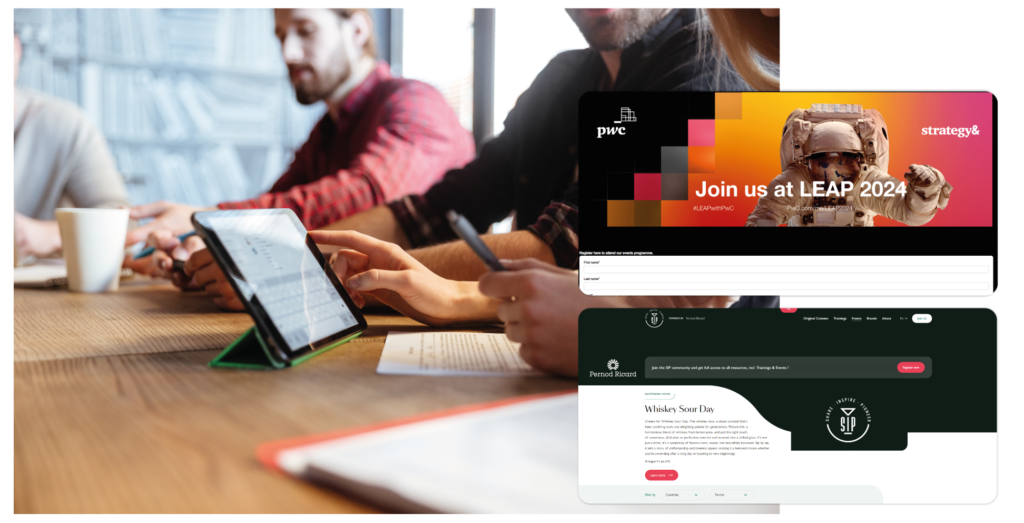
Used by some of the world’s top brands such as Pierre Fabre Group, Van Cleef & Arpels, and PwC, Eventtia offers a robust interface that enhances both organizer and attendee interactions, ensuring every aspect of the event is intuitive and enjoyable.
Highly customizable, Eventtia allows organizers to tailor the platform to suit diverse event requirements, whether it’s a product launch or a multi-day conference.
Melanie Schmidt, IT Manager at Pernod Ricard, highlights the value of Eventtia in creating tailored event experiences. She states, “Eventtia allows our brands to design highly personalized events that resonate with their audiences.”
Security is a top priority for Eventtia, with robust measures in place to protect attendee data and secure financial transactions.
Eventtia’s real-time event analytics provide organizers with instant insights into attendee engagement and other critical metrics.
For organizations using multiple digital solutions, Eventtia seamlessly integrates with CRM systems and email marketing software, ensuring smooth operation across platforms.
Customer support is another strength of Eventtia, offering responsive assistance to address any issues or concerns that may arise.
In a rapidly evolving event landscape, Eventtia excels in supporting in-person, virtual, and hybrid event formats, ensuring exceptional execution regardless of the event type.
You can view pricing and you may contact us for a free personalized consultation.
Event webpage, social wall, and registration form powered by Eventtia.
5. Focus on Event Planning Details
The success of your events relies on a thorough plan that covers every aspect, ensuring seamless execution and readiness for unexpected challenges.
Once you’ve sorted out your event’s costs and timeline, it’s time to start planning!
Create a detailed event master plan to keep everything organized and coordinate smoothly with volunteers and committee members.
This plan should cover venue logistics, catering, speaker management, agenda creation, activities, promotion (including emails, printed materials, media, and social media), registration procedures, ticketing and online payments, sponsor management, and volunteer roles.
Questions to consider:
- Have we established a clear timeline for tasks leading up to the event?
- Does our plan incorporate insights from past events? It is crucial to conduct a post-event review to analyze the past event, identify what worked and what didn’t, and apply the lessons learned to improve future projects.
- How have we prepared for potential obstacles?
- Does our event platform offer excellent customer support in case of technical issues?
For its 2023 summer season, Dior chose to unveil its highly anticipated Dioriviera capsule across stunning global locations. Designed by Maria Grazia Chiuri, the collection features ready-to-wear, accessories, and shoes in radiant pastel hues.
Supported by Eventtia’s comprehensive event management platform, Dior hosted its pop-up at Ember Restaurant & Beach Club in Malaysia, creating a vibrant setting reminiscent of endless summer days.
Dior’s successful pop-up experience was a result of meticulous planning aimed at showcasing their products and engaging customers through interactive experiences.
6. Use Your Brand Identity for Memorable Impressions
Customized event registration pages powered by Eventtia.
In a competitive environment, an event’s brand elements—from the logo to the tagline—must be eye-catching, memorable, and reflect the event’s essence.
This branding sets the stage, creates anticipation, and leaves a lasting impression long after the event concludes.
Here are a few branding steps for event planning:
- Brainstorm event names carefully: Consider how your event stands out, the message it conveys, and its main components.
- Create a tagline: Once you’ve chosen a name, create a short, memorable slogan that describes the event.
- Design a logo: For major or recurring events, design a logo that ensures instant recognition and aligns with your organization’s branding.
- Develop your visual identity: Establish a cohesive visual identity for your event by selecting fonts, colors, graphics, and thematic elements that tie everything together.
Following these steps will help create a consistent and recognizable brand for your event across all promotional materials and communications.
Questions to consider:
- How does our branding differentiate our event from others?
- What emotions or concepts do we want attendees to associate with our event brand?
- How can we maintain brand consistency across all event interactions?
- Does our event management platform support custom brand identity elements and white-label solutions?
For instance, the new Tiffany & Co Blue Box Café Pop-Up aimed to embody the brand’s luxury, elegance, and romantic spirit.
The venue was adorned in Tiffany Blue, featuring seating for guests to enjoy light refreshments like coffee, tea, pastries, and sandwiches.
The food and beverages were presented in Tiffany Blue packaging and served by Tiffany & Co. staff dressed in matching Tiffany Blue uniforms.
7. Create Your Event Marketing Strategy
Eventtia is the platform behind the brands setting the standard.
Talk to us about how the platform fits into your stack — registration, communications, on-site, and analytics, exposed deeply enough to compose.

Keep reading.
The Psychology of Uncertainty, or How to Connect People at Events
Events are a way to bring people together and provide a common space for interaction and sharing. People attend events to discover like-minded…
Top 8 Hospitality Platforms for Events and Consumer Experiences
This article provides an analysis of 8 top hospitality platforms for events, helping you to identify the one that works best for your requirements.
How to Use Data and Analytics to Plan a More Impactful Event
The recent surge of data available at our fingertips has brought new opportunities for businesses and event marketers.